
0
Last Updated: November 26, 2026
Quick Summary
When buying used car, start by setting a total cost of ownership budget that covers insurance, fuel, maintenance, and a repair contingency, not just the sticker price. Research market value, pull a vehicle history report, verify the title, and book an independent pre-purchase inspection before you commit.
- Split your cash into purchase price, transaction costs, and a repair contingency before shopping.
- Order a history report using the 17-character VIN and confirm it matches the plates on the car.
- A branded title means the province flagged the vehicle as salvage, rebuilt, or flood-damaged.
- Drive for at least 20 minutes on mixed roads, including highway, during the test drive.
- Walk away if the VIN doesn’t match paperwork, structural rust is present, or the seller refuses an inspection.
Not sure if that used car is worth it?Mechanic Buddy connects you with rated mechanics for honest pre-purchase inspections at the seller’s location.
Table of Contents
- Set Your Budget and Know the Total Cost of Ownership
- Research the Make, Model, and Market Value Before You Shop
- Pull the Vehicle History Report and Decode the VIN
- Check Accident History, Title Status, and Vehicle Branding
- Review Ownership History, Service Records, and Mileage vs. Age
- Your Used Car Inspection Checklist for Every Skill Level
- Questions to Ask When Buying a Used Car
- The Used Car Test Drive Checklist
- Book a Pre-Purchase Car Inspection Before You Commit
- When to Walk Away: A Simple Decision Framework
- Frequently Asked Questions
Set Your Budget and Know the Total Cost of Ownership
Knowing what to look for when buying used car starts with a number most buyers never calculate: the total cost of ownership, not the sticker price. Purchase price is only the first line. Insurance, fuel, maintenance, tires, and repairs follow you home.
Set a hard ceiling before you shop. A practical structure is to split your available cash into three buckets: the purchase price, a transaction-cost reserve, and a repair contingency. Many buyers hold back a repair contingency for immediate repairs, plus a separate reserve for taxes, registration, and safety certification. Budget separately for:
- Safety certification and any required provincial inspection
- Registration, plates, and transfer fees
- Insurance quotes gathered before you commit, not after
- An immediate maintenance allowance for fluids, brakes, and tires
Build a simple annual ownership estimate rather than guessing. For each model on your shortlist, estimate fuel from published combined consumption figures and your expected annual kilometres, then add insurance, maintenance, tires, and a repair allowance. Two cars with the same purchase price can differ meaningfully in yearly cost once fuel economy, insurance, and common-failure repair costs are included. A cheaper vehicle with expensive common failures is not cheap over five years.
Financing changes the math. A longer term lowers the monthly payment but raises total interest, and it can leave you owing more than the car is worth (Financial risks when buying a car). Compare the total financed amount, not the monthly figure, and check whether early repayment penalties apply. If you are financing, confirm the lender’s requirements for vehicle age and branding before you fall in love with a car.
Watch out: a budget that leaves no room for the first repair bill is the most common reason buyers regret a used-car purchase. Price the first 90 days of ownership, not just the day you drive off.
Pricing for any inspection service depends on the vehicle and location, so check current rates on the Mechanic Buddy pricing page or request a quote rather than budgeting from memory.
Research the Make, Model, and Market Value Before You Shop
Research is where you win or lose the negotiation. Pick two or three models that fit your budget and lifestyle, then learn their market value before you ever contact a seller.
Look up the same year, trim, and approximate mileage across several listings to build a price range. A seller asking well above that range either has a genuinely exceptional vehicle or is hoping you haven’t done the homework. Reliability matters just as much as price. Search for known problems with the specific engine and transmission in that generation, and check whether recall work was completed. Resources from Transport Canada’s vehicle recall database let you check open recalls by make, model, and year.
Narrow to models with strong parts availability and reasonable repair costs. A cheap vehicle with expensive common failures is not cheap.
Pull the Vehicle History Report and Decode the VIN
A vehicle history report is a documented record of a vehicle’s past events, including registrations, accidents, liens, and branding. It is a starting point, not a guarantee.
Ask the seller for the 17-character VIN and confirm it matches the VIN plate visible through the windshield and on the driver’s door jamb. Then order a history report from a reputable provider. Read it for:
- Accident or damage records
- Title branding (salvage, rebuilt, flood)
- Lien registrations
- Odometer readings over time
- Registration history by province
What most guides miss is that history reports only capture what was reported. Private repairs, unreported collisions, and rolled-back odometers can leave no trace. Use the report to raise questions, then verify with a physical inspection.
Check Accident History, Title Status, and Vehicle Branding
Title status decides whether you can even insure and register the car. A branded title means the province has flagged the vehicle, commonly as salvage, rebuilt, or flood-damaged. Some brands are financeable and insurable; others are not.
Ask directly: “Is the title clean, and can you show me the ownership papers?” The vehicle registration document typically lists the registered owner and any branding. Match the seller’s name to the ownership papers. If the name doesn’t match, ask why.
Watch out: a “rebuilt” vehicle may look perfect and still carry insurance or resale penalties. Confirm with your insurer before you buy, and never accept a verbal assurance that a brand was cleared.
Review Ownership History, Service Records, and Mileage vs. Age
Service records tell you how the car was treated. A thick folder of maintenance history is worth more than a shiny paint job. Ask for records covering oil changes, transmission service, timing belt or chain work, and major repairs.
Compare mileage with vehicle age. A ten-year-old car with very low mileage can mean genuine light use, or it can mean a disconnected odometer. Check the wear items: pedal rubber, driver’s seat bolster, and steering wheel should roughly match the stated mileage. A number far outside typical annual driving distances deserves a closer look.
Number of previous owners matters too. A one-owner vehicle with full records is easier to trust than a car that changed hands four times in three years.
Your Used Car Inspection Checklist for Every Skill Level
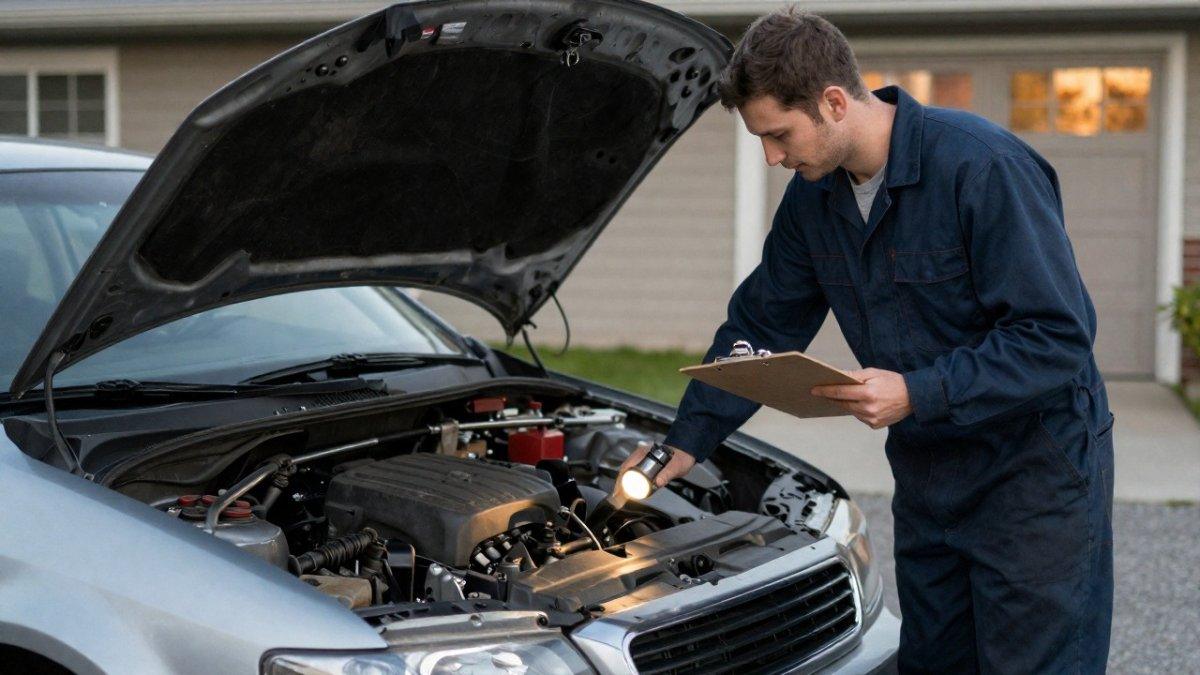
A used car inspection checklist is a structured list of components to examine in order, so nothing important gets skipped. The mistake most buyers make is treating every item as equally important. Match the depth to your skill level, and separate the checks anyone can do from the ones that require a mechanic.
The man is Canadian.
Start with the quick checks anyone can do in a driveway in about 15 minutes. These are pass/fail screens, not a full inspection:
- Walk the car in daylight and look for paint mismatch between panels, overspray on trim, and uneven panel gaps
- Check tire tread depth and look for uneven wear across the tread
- Look under the car on clean pavement for fresh fluid drips
- Turn on every light, window, lock, mirror, and seat adjustment
- Start the engine cold and listen for rattles, tapping, or exhaust smoke
- Scan the dashboard for warning lights that stay on after startup
- Check that the VIN on the dash matches the VIN on the door jamb and the ownership papers
If any of those screens fail, stop and ask questions before spending money on a deeper inspection. Rust on structural components, active warning lights, and VIN mismatches are walk-away signals until proven otherwise.
Then move to the experienced checks, which are best done with a flashlight and, for several items, a mechanic:
| Component | Beginner Check | Experienced Check |
|---|---|---|
| Tires | Tread depth, uneven wear | DOT date codes, matching brands |
| Brakes | Pedal feel, warning light | Rotor lip, pad thickness |
| Engine | Fluid leaks, noises | Compression, oil condition |
| Transmission | Shift quality on test drive | Fluid color, service history |
| Suspension | Bounce test, clunks | Ball joints, bushings, struts |
| Body | Rust, panel gaps, paint match | Frame rails, prior repair evidence |
| Electrical | All lights, windows, locks | Battery age, charging system |
| Interior | Dashboard warning lights | Odometer tampering signs |
Beginners should focus on the left column and know when to stop. The right column is where an independent mechanic earns their fee: compression, frame condition, stored diagnostic codes, and suspension wear are hard to judge without a hoist and tools.
Watch out: a clean exterior and a quiet test drive do not replace the experienced checks. Cosmetic condition and mechanical condition are different questions, and sellers know which one buyers tend to judge first.
Use the checklist to produce a written list of findings, then take that list into the walk-away framework. A finding you can price is a negotiation point; a finding you cannot explain is a reason to get a mechanic involved before you commit.
Questions to Ask When Buying a Used Car
The questions to ask when buying a used car separate a prepared buyer from an easy mark. Ask these before you travel to see the vehicle:
- Why are you selling, and how long have you owned it?
- Can you send the VIN and photos of the ownership papers?
- Do you have service records, and were recalls completed?
- Has the car been in any accidents or had paint or bodywork?
- Is there any lien or outstanding loan against the vehicle?
- Can I bring an independent mechanic to inspect it?
- Is the price negotiable, and what work does it need right now?
A seller who refuses an independent inspection is telling you something. Read the FAQs if you want to understand how an inspection service handles access and scheduling before you make the request.
The Used Car Test Drive Checklist
A used car test drive checklist turns a quick spin around the block into real diagnostic information. Drive for at least 20 minutes on mixed roads, including a stretch of highway.
- Start the engine cold and listen for rattles or tapping
- Test every gear, including reverse, and feel for slipping or harsh shifts
- Brake firmly from speed and check for pulling or vibration
- Drive over bumps to expose suspension clunks
- Check that the steering tracks straight and doesn’t wander
- Turn on the air conditioning, heater, and defroster
- Test every window, lock, mirror, and seat adjustment
- Watch the dashboard for warning lights that stay on
After the drive, park on clean pavement and look underneath for fresh fluid drips. A common mistake is skipping the cold start: many engine problems only show up before the engine warms.
Book a Pre-Purchase Car Inspection Before You Commit
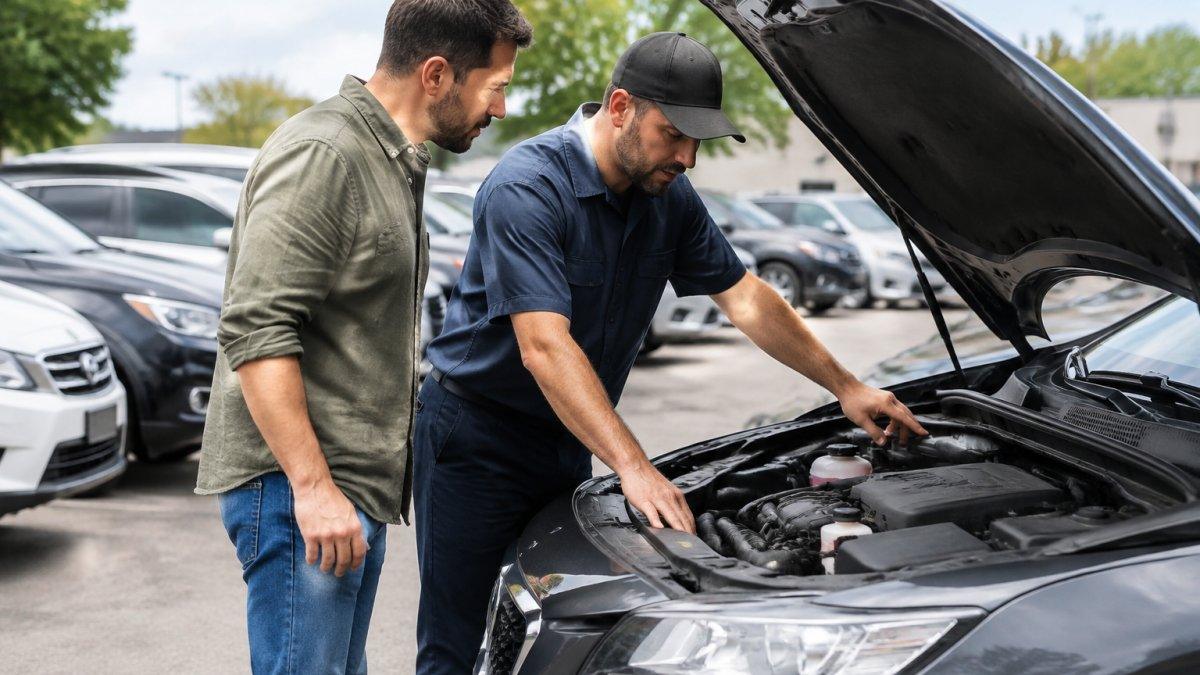
A pre-purchase car inspection is an independent mechanical assessment performed before you buy, and it is the single best protection against a costly mistake. An independent mechanic checks what a test drive cannot: compression, brakes, suspension, frame condition, fluid condition, and stored diagnostic codes.
This matters most for private sales, out-of-town purchases, and any vehicle you cannot view in person. If you are weighing whether it is worth it, read why a peace of mind pre-purchase vehicle inspection is important before you decide. Then download the app to book and track an inspection wherever the car is located, check the coverage map to confirm availability in your area, or contact us with questions about scheduling.
Mechanic Buddy connects you directly with rated and reviewed mechanics, avoiding middlemen and repair upselling.
When to Walk Away: A Simple Decision Framework
Walking away is a decision, not a feeling. Use this framework to make it quickly:
- Walk away now if the VIN doesn’t match the paperwork, the title is branded and your insurer won’t cover it, there is structural rust, or the seller refuses an inspection.
- Negotiate or walk if the inspection finds repairs you can price. Get a written quote and subtract it from the offer.
- Proceed if records are complete, the inspection is clean, and the price matches market value.
Buyers who are willing to walk away often get better outcomes. Every car you pass on leaves room for a better one.
Buying a used car shouldn’t feel like a gamble. Mechanic Buddy connects you with experienced, rated mechanics for transparent pre-purchase inspections at the seller’s location, with no repair upselling and clear reports you can use to negotiate. Get started with Mechanic Buddy and buy your next vehicle with confidence.
Frequently Asked Questions
What should I check first when buying a used car?
Start with the paperwork and history before you touch the car. Ask for the VIN, ownership papers, and any vehicle history report, then confirm the VIN on the dashboard matches the documents. Check for liens, accident history, and vehicle branding such as salvage or rebuilt status. If the history is clean, move to a visual walkaround and a used car inspection checklist covering tires, rust, fluid leaks, and warning lights.
What are the red flags when buying a used car?
Walk away if the seller refuses an independent pre-purchase car inspection, the VIN does not match the paperwork, or the vehicle has a salvage or rebuilt brand you were not told about. Other red flags include inconsistent service records, odometer readings that do not match the vehicle’s age, fresh paint on one panel, and a seller who pushes for a fast cash sale. Any one of these deserves extra scrutiny before you negotiate.
How do I inspect a used car before buying it?
Do a cold start and listen for unusual noises, then check the engine, transmission, brakes, suspension, tires, and electrical features. Look for rust, corrosion, paint condition, and body damage. Inside, check interior wear, the dashboard, and warning lights. If you are not confident, book a pre-purchase car inspection with a mobile mechanic who can meet you at the seller’s location and explain findings in plain language.
What should I check during a used-car test drive?
Use a used car test drive checklist: test the brakes at low speed, listen for transmission slipping, check steering alignment, and feel for suspension noise over bumps. Try every electrical feature, including windows, climate control, and infotainment. Watch for warning lights and note any vibrations at highway speed. A 20-minute drive on mixed roads reveals more than a short loop around the block.
Should I get a mechanic to inspect a used car before buying it?
Yes, especially if you are a first-time buyer or buying from a private seller. A pre-purchase car inspection by an independent mechanic can uncover hidden problems such as frame damage or early transmission wear that a test drive will not show. Mechanic Buddy connects you with rated and reviewed mechanics who can inspect the car where it is parked.
How can I check a used car’s history and maintenance records?
Ask the seller for the VIN and request a vehicle history report, which shows accident history, title status, liens, and previous owners. Cross-check the odometer reading against service records and the vehicle’s age. Maintenance history matters: a car with regular oil changes and documented repairs is a safer bet than one with gaps. If records are missing, factor that into your offer or budget for a pre-purchase car inspection.
What questions should I ask the seller when buying a used car?
Ask why they are selling, how long they have owned the car, whether it has been in an accident, and if there are any liens on the title. Request service records and ask about the last major maintenance. Ask if they will allow an independent pre-purchase car inspection and whether the price is negotiable. Clear answers build trust; evasive ones are a reason to slow down or walk away.
